
Hardy County Recent Arrest Path
Hardy County runs no jail of its own. The Hardy County Sheriff’s Office states that people awaiting hearing or trial, along with those serving county jail terms, are held at Potomac Highlands Regional Jail and Correctional Facility in Augusta. The sheriff also transports prisoners to and from court. An arrest in Hardy County can begin with the sheriff, Moorefield Police, Wardensville police, or West Virginia State Police. That split shapes where records live. The arresting agency keeps its incident file. The regional jail and the West Virginia Division of Corrections and Rehabilitation hold admission and custody data, while magistrate and circuit court records track charges, bond, and hearings. VINE flags custody changes. Potomac Highlands serves five counties, so confirm county, agency, date, or case number before trusting a match.
Hardy Arrest Feed Windows
Hardy County publishes no clocked 24-hour feed or weekly blotter. The nearest official tools are the DCR Daily Incarcerations list and the DCR jail search. "Daily" names a query category only. It does not promise every Hardy arrest appears within a day. DCR cautions that public data may be incomplete. It may not reflect true location, release, or status.
| Need | Official-first route | Meaning |
|---|---|---|
| Newest admission | Arrests Last 24 Hours | DCR fallback with no guaranteed 24-hour window |
| Several days | Police Blotter | DCR, court, records, and dated news kept separate |
| One status | VINELink Custody Check | Custody alerts, not arrest history |
An empty result proves little. Intake may still be underway, the person may have been released or transferred, data may lag, or another agency may hold the individual.
Search Hardy County Jail Records
For regional-jail lookups, the DCR jail offender search is the official tool. Search by the name fields, then compare admission date and facility. Confirm Hardy origin through the arresting agency or court. The Daily Incarcerations query can pin down a dated intake. Admission time is not always arrest time, though.
| Field | Use |
|---|---|
| Name | Check spelling and identity; common names collide. |
| Number | Distinguish records and narrow a request. |
| Admission date | Separate jail intake from arrest and update times. |
| Facility/status | Read as regional custody, not Hardy-origin proof. |
| Charge | Treat as an charge until disposition. |
The official regional-jail screen documents the correct custody interface.
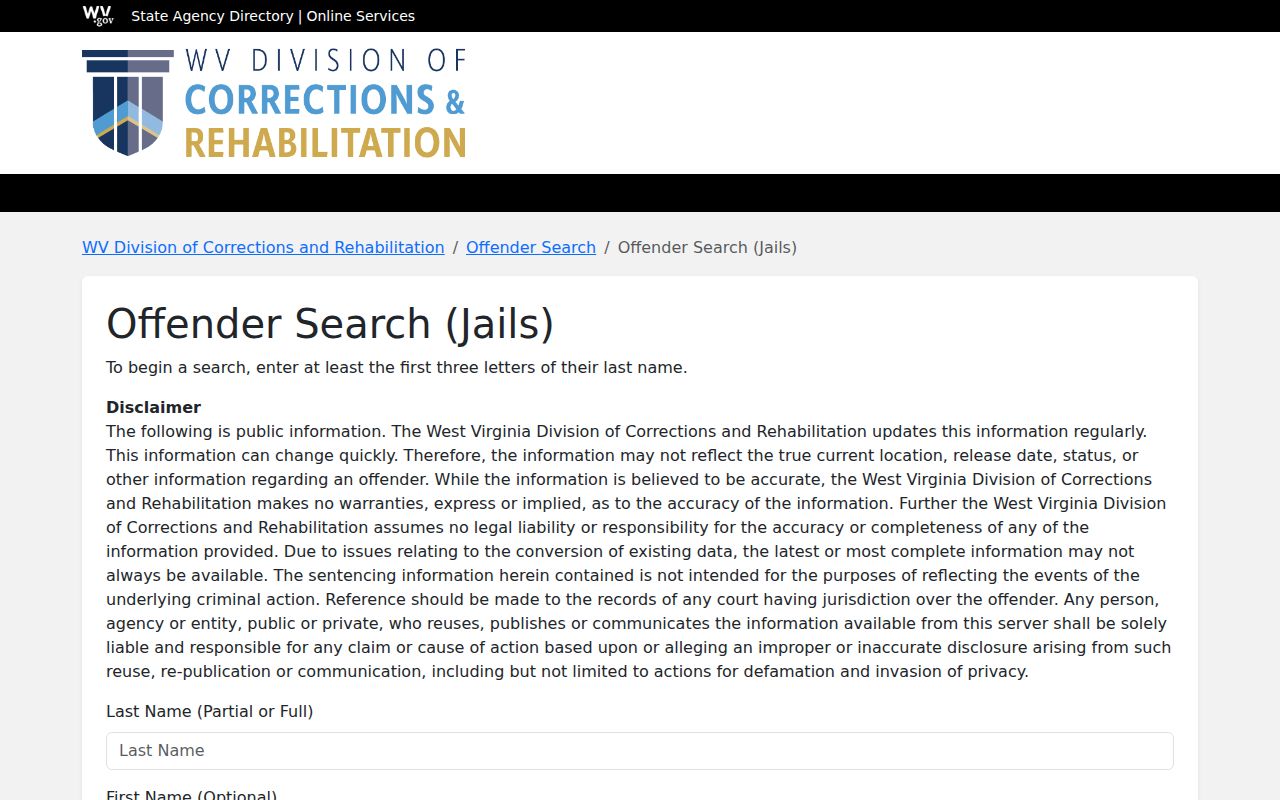
This is a plain official search interface, not a photo gallery.
Hardy Arrest Record Fields
A booking record is an intake snapshot. Public systems expose no uniform field list. Expect a name, aliases, booking number, admission date, delivering agency, alleged charges, case number, bond, custody location, and release or transfer data. Internal jail files can also hold medical, emergency-contact, identification, property, and security material that never reaches the public web.
| Item | What it shows |
|---|---|
| Agency | Who created the arrest record |
| Booking date | When intake occurred |
| Booked charge | The charge entered at intake |
| Bond/event | A procedural status that can change |
| Disposition | The later court outcome |
Never publish fingerprints, Social Security numbers, medical data, victim details, juvenile material, or confidential investigative content. A lawful exemption may explain a missing field.
Hardy Mugshots and Arrest Photos
Hardy County posts no official mugshot gallery. Sheriff and town pages carry no photo roster. DCR does not promise a photo in every result. A sentenced state prisoner belongs in the DCR prison search rather than a recent-arrest feed. Ask the agency or DCR custodian that keeps the booking photo. Ask whether it is retained and disclosable. West Virginia Code §62-1-6a limits certain law-enforcement social-media sharing of booking photos for alleged minor offenses. It also offers a qualified removal process after specified favorable outcomes. It bans no photo outright and guarantees nothing on private sites. The official photo statute carries the controlling text.
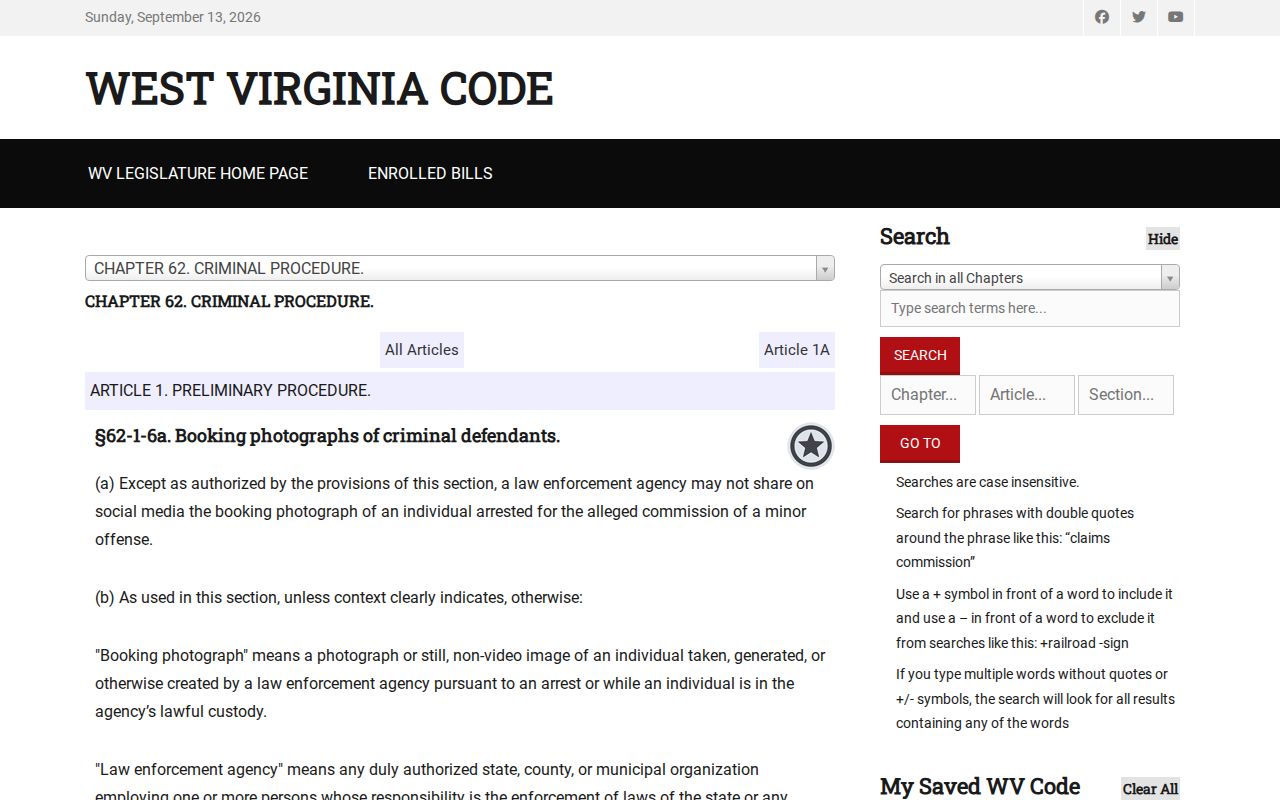
Read it with the disposition and the identity of the sharing agency.
Request Hardy Arrest Records
West Virginia FOIA directs each request to the body that created or maintains the record. Hardy publishes no booking portal, photo fee schedule, or guaranteed turnaround. Identify the person, date, agency, record type, and format you want. Any denial or redaction should come with its statutory basis.
- Choose the sheriff, town police, DCR, regional jail, or court clerk.
- Describe the incident, admission, release, transfer, or photograph narrowly.
- Cite WV Code §29B-1-3 and request inspection or copies.
- Compare booking data with the court disposition.
The statute requires action within five days, excluding weekends and legal holidays, subject to exemptions. Actual reproduction cost may apply. The courthouse sits at 204 Washington Street, Moorefield, WV 26836. Office hours run 9 a.m. to 4 p.m. on weekdays that are not legal holidays. The FOIA statute sets out the timing and specificity rules.
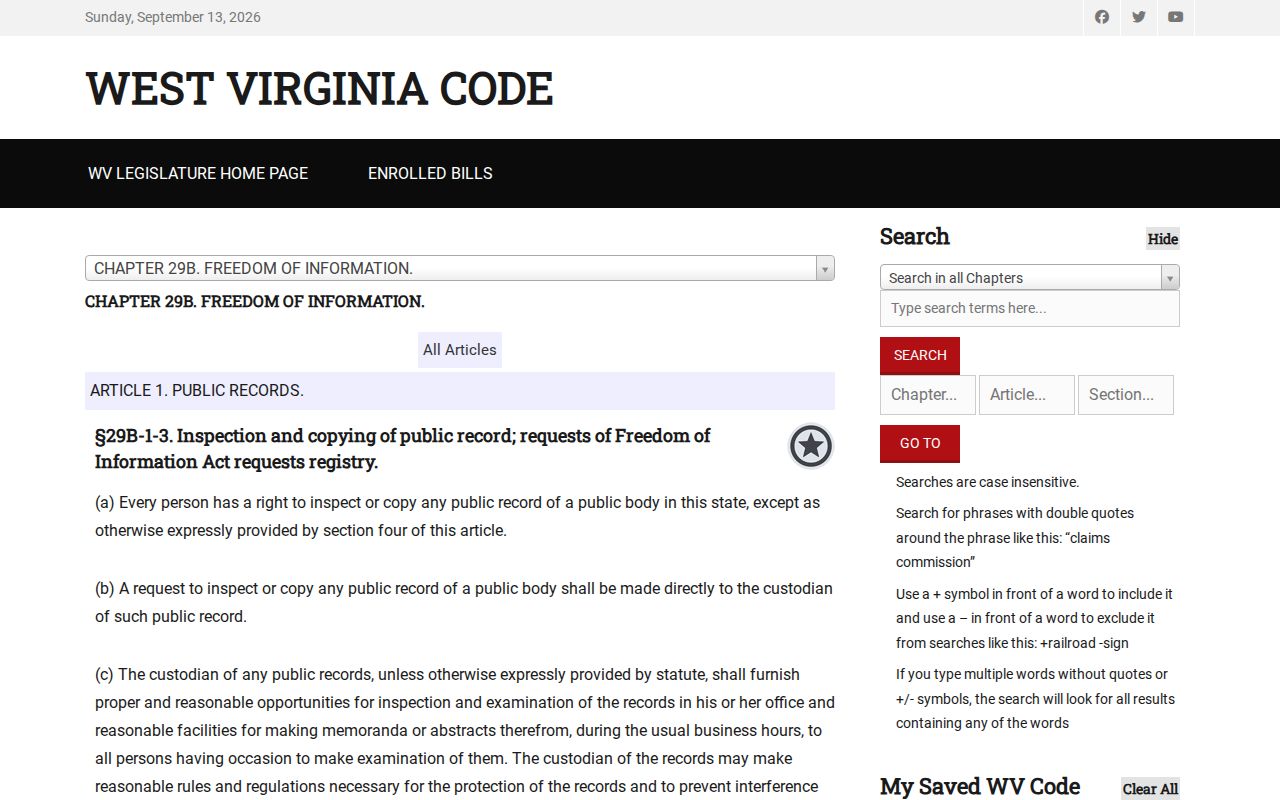
This distinguishes a record request from a custody or court query.
Hardy Arrest Law and Removal
WV FOIA exemptions can shield investigative material, confidential sources, and personal information. They can also shield content that would impede an investigation. Juvenile, sealed, expunged, victim, medical, and security data may all be restricted. Dismissal or acquittal expungement under §61-11-25 differs from eligible conviction expungement under §61-11-26. The official court forms are the starting point. RecentlyBooked posts a no-fee correction and removal policy for listed grounds. Arrests.org publishes no equally clear policy. Both are unofficial. Paying a middleman never erases an official record. Start with the court and the source agency. Keep the order or correction. Use a documented free publisher process where one exists. Then deal with stale search results.
Hardy Warrants and Wanted Alerts
Hardy County offers no live warrant portal. The sheriff serves warrants. The county's Outstanding Warrants PDF dates to 2013, though, and is historical only. A current concern belongs with the sheriff at 304-530-0222, the court clerk, or an attorney. An open court case does not prove an active warrant.
Hardy Arrests Reach Court
After an arrest in Hardy County, the case moves to court. The Magistrate Record Search tracks it by name or case number. The full documents stay offline. What it does show is filing date, arresting agency, charge, bond, and case events. The official magistrate search is where a Hardy case gets confirmed. Jail time can end long before the case does.
This court screen does not establish live custody.
Hardy Arrests by City
Hardy County has just two incorporated towns. Moorefield Recent Arrests follows the Moorefield Police path in the county seat. Wardensville Recent Arrests covers the town contact, though no blotter is published there. Remember that where someone was arrested is one thing. Where they are held can be another place entirely.
State and Federal Custody
Not every Hardy County detainee sits in a local jail. A sentenced state prisoner shows up in the DCR prison search. Federal inmates go through the BOP locator. Federal pretrial detainees can be housed locally under a Marshals arrangement. ICE custody runs through its own locator. Local Moorefield Examiner reporting has described Hardy cooperation with ICE. No public agreement document confirms the details. Rely on the federal source for current status.
Hardy Booking Custody States
Every booking search starts with one question: what is the custody state? "Just booked" can lag behind reality. "In custody" means an official source confirms confinement. "Released" means that custody ended, though the Hardy County arrest record itself stays on file. "Sentenced state prison" points to the DCR search. Federal custody belongs to BOP or ICE. Someone can drop off a jail roster with a case still active. A booking photo can linger after release. Keep the source, county, agency, and case number attached to every claim.
- Booking
- Intake after arrest.
- Arraignment
- First formal court appearance.
- Bond
- Release conditions while a case is pending.
- Disposition
- The recorded court outcome.
- Expungement
- A court process for eligible records.
Hardy County Source Landscape
Hardy County arrest information flows from distinct sources. Each has its own job. Sheriff and town police establish which agency made the arrest. DCR answers for custody, VINE sends alerts, and the West Virginia Judiciary handles case files. A records custodian fields FOIA requests. Local news keeps dated reports, and unofficial sites serve only as leads.
| Channel | Status | Best use |
|---|---|---|
| Sheriff or police | Official | Agency and incident records |
| DCR | Official | Jail or prison custody |
| VINE | Official | Status alerts |
| Judiciary | Official | Case disposition |
| Local news | Journalism | Dated reports |
| Aggregators | Unofficial | Leads to verify |
RecentlyBooked runs a rolling thirty-day Hardy page with filters and status codes. Arrests.org offers its own set of both. Treat both with caution. Entries can sit stale, vanish, duplicate, or land under the wrong county. Check the name, date, agency, and case status against the weekly Moorefield Examiner or event-driven WHSV. Neither works as a true blotter.
Older Hardy Arrest Records
Hardy County posts no booking-record retention schedule. So how far back records reach is never fixed. Web displays, agency files, jail data, court records, and archives all sit in separate systems. Ask which schedule applies. Ask whether a record was transferred or destroyed, and whether a redacted copy can be released. Year, agency, name, and case number should ride along with any request. The State Archives Hardy collection covers history, not live custody. The county-records framework shows the schedule context. It helps a requester name the right record series without assuming a file still exists.
After a Hardy County Arrest
Booking is only the first step. An arrest in Hardy County can then lead to arraignment, bond, release terms, hearings, a plea, trial, or sentence. The disposition record captures the final outcome. A transfer changes where to search. Someone might move to another jail, state prison, federal custody, or release. VINE may only notify after arrival rather than at departure. Court records keep running even after a person walks free. Think of Hardy's system as a map. The agency owns the arrest, DCR owns custody, VINE sends alerts, the court records the outcome, and FOIA reaches retained files. Keeping those roles straight prevents reading more into a source than it can support.
Hardy Records Request Boundaries
A public-record request works best when it targets a defined public document. Avoid sensitive material buried in an internal jail file. Those internal booking records hold far more than the public result. They can include addresses, admission phone calls, medical details, emergency contacts, driver data, Social Security numbers, property, and security needs. Ask only for the piece that answers the question. That means the incident report, arrest record, admission or release log, transfer, policy, or photograph itself.
Custodians have redaction authority too. Expect juvenile information, victim identities, confidential sources, and active investigative details to come out before release. Medical data and security material come out too. A denial citing an exemption is not the same as a claim that no record exists. Request a written response naming which condition applies. Did the sheriff's office create the jail intake record? If not, ask it to identify the DCR or regional-jail custodian who did.
Fees are modest but real. The circuit-clerk material lists photocopies at one dollar per page plus a criminal-expungement filing entry. The exact fee and procedure need direct confirmation. A qualifying dismissal or acquittal can follow a different statutory rule entirely. A record request, a court-copy order, and an expungement petition remain three separate transactions.
Hardy Arrest Photo Corrections
Every correction starts at the source that owns the record. Was a name, date, agency, charge, or disposition wrong? Preserve the conflict in writing. Then contact the agency or court directly, and if a court grants relief, follow the official forms and notification steps, since a search result can stay stale even after a source fixes its copy.
Private sites operate differently. RecentlyBooked's written policy makes qualifying requests free and covers dismissal, sealing or expungement, outdated or incorrect data, wrong person, juvenile status, and duplicate records. It asks for the record URL, name, arrest date, jurisdiction, reason, and legal documents when applicable. That policy governs only RecentlyBooked's copy. Arrests.org displays a removal area but publishes no comparably clear written policy. The documented no-fee policy appears below.
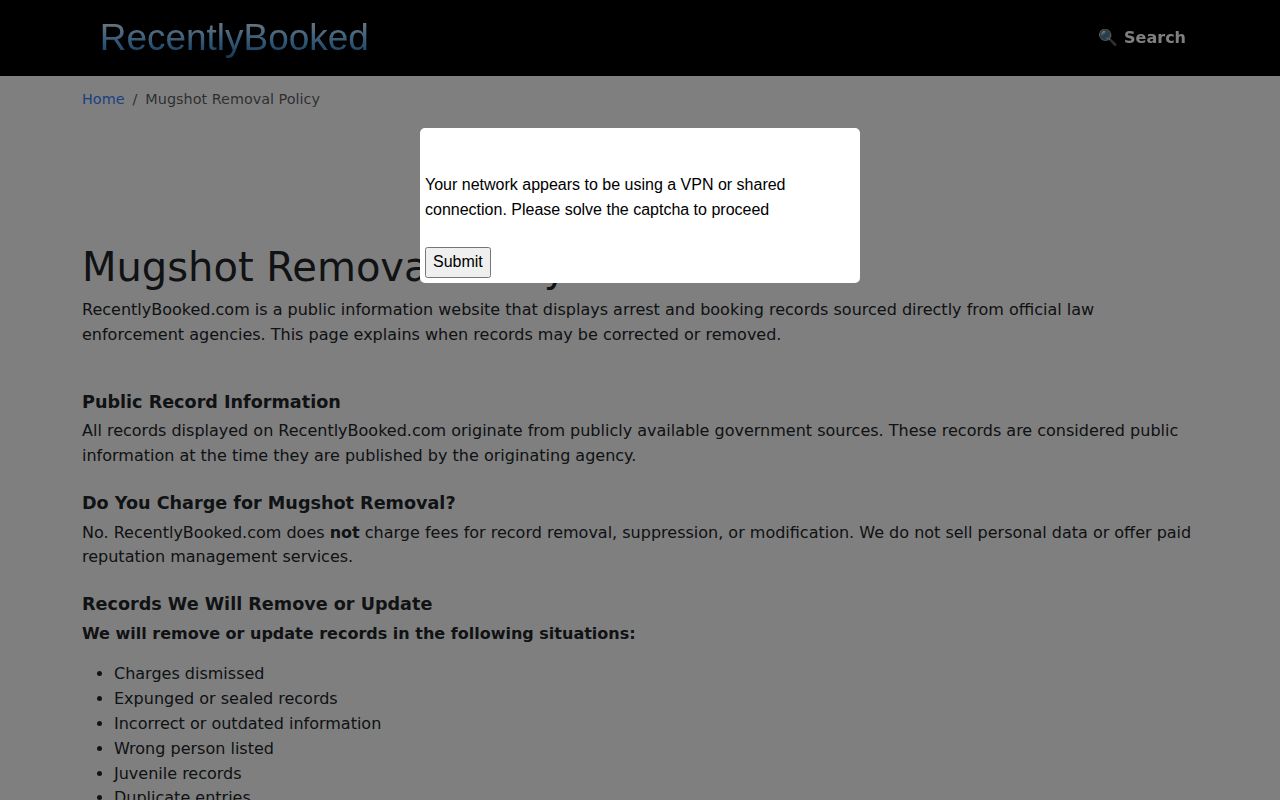
The private-site process only comes after official court and source corrections, and it never changes government files.
Hardy County Agency Contacts
Hardy County splits its arrest questions across offices. The sheriff answers at 304-530-0222. Emergency Services takes non-emergency calls at 304-530-0291. Magistrates sit at 304-530-0210 and 304-530-0211, with the clerk at 304-530-0212. Moorefield Police uses 304-530-1777. Wardensville Police uses 304-874-3950. Keep each call inside that office's lane. Potomac Highlands Regional Jail, at 304-496-1275, is the custody destination the sheriff names, though the facility is not Hardy-only. VINE sends release or transfer alerts, which cuts down repeated status calls. For court papers, ask the clerk.
When the arresting agency is a mystery, the event date and location come first. Town limits point to Moorefield or Wardensville police, while unincorporated ground points to the sheriff or state police. A delivering agency named in DCR or court data can also show who keeps the incident record.
Hardy County Search Checklist
Start by naming the need. Is it a fresh arrest, current custody, a release alert, an incident report, a court outcome, or an older archive? Then pick the office that owns that question. Compare identity and jurisdiction fields. Note the observation time. Follow the case to disposition before calling it finished. Unofficial and news sources come last. They may surface a date or an agency statement, but they cannot establish current confinement. If an official source is unavailable, say plainly that verification was not possible. Never fill a gap with an assumption built on a photograph, surname, facility, or county label.
Each office answers only its own question: the arresting agency keeps the event record, DCR tracks custody, VINE reports status changes, courts record case events, and archives preserve selected history. One search can touch all of them.
Hardy County Verification Standard
A matching name alone proves little. Stack the details instead. Compare the arrest or admission date, the agency, the county, the offender or booking number, age or birth data when lawfully displayed, and the court case. Potomac Highlands houses people from five counties. Facility location alone cannot establish Hardy origin. An unofficial Hardy page may mislabel Moorefield, Wardensville, or an unincorporated spot. Write only what the source proves. "DCR reported regional-jail custody on the search date" beats "the person is in the Hardy jail." "The court index showed a filed charge" beats a claim of conviction.
When data changes, keep the earlier observation date and update the present status through the official custodian. Charges, bond, custody, and disposition shift on different schedules. Check each through its proper source, and never blend stale and current facts into one misleading profile.